
Watching this film was excruciating, but I mean that in a good way. “Gett” is distressing by design, as it brings us along on the journey of an Israeli woman, Viviane, while she tries over the course of five harrowing years to obtain her husband’s permission to divorce him.
Already I can hear the secular, post-feminist American grumblings, “Five years?!?” and “What do you mean, permission?” so just a little cultural context: Viviane is what’s called a “chained woman.” These are devout Jewish women who want a Jewish divorce, called a “get,” but whose husbands refuse to grant them. Almost everything hinges on the husband in these cases–provided he doesn’t beat or neglect her, a husband can hold out for as long as he likes. Without the get, she can be chained to him for years, or even a lifetime.
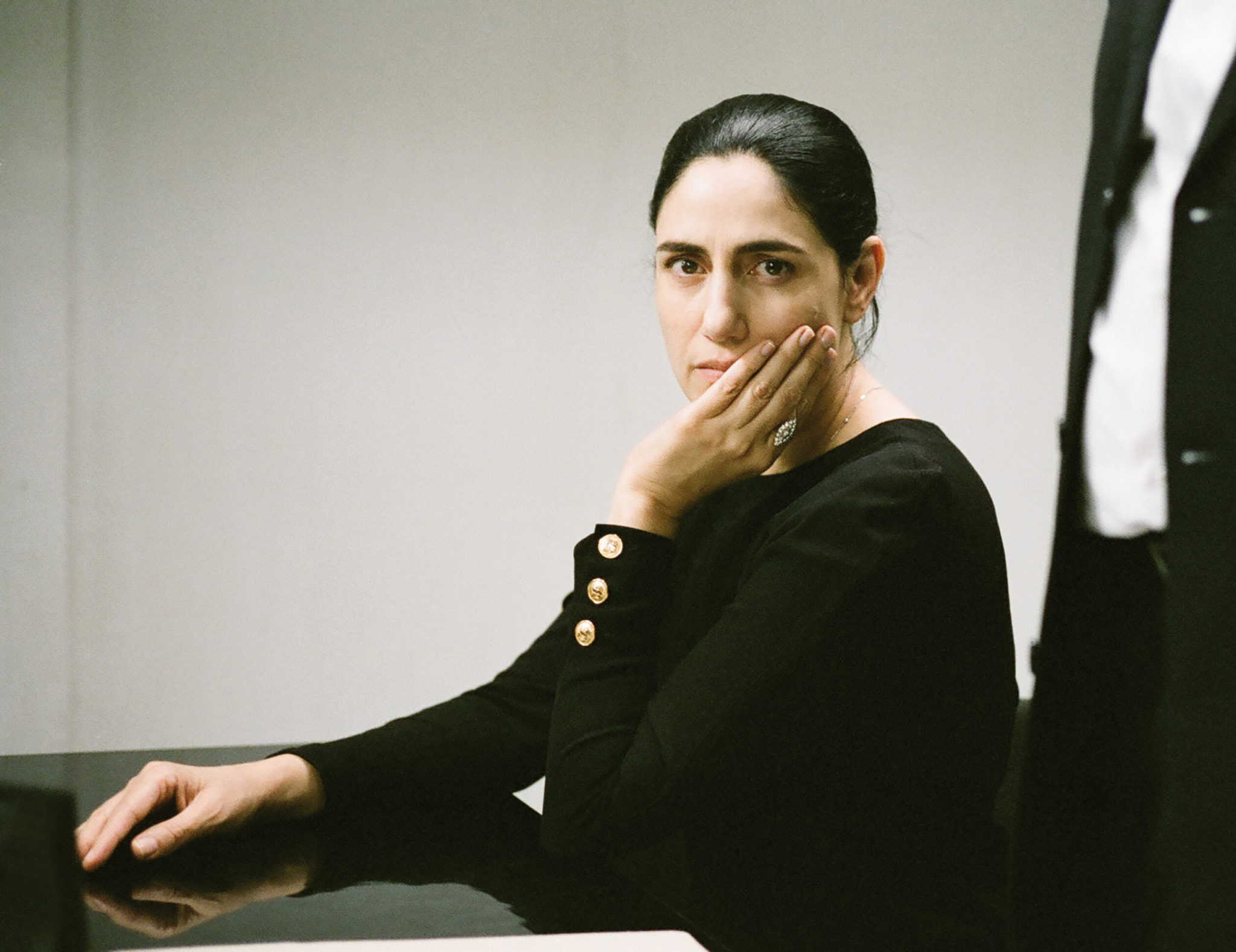
Viviane’s saga unfolds in the dingy, cramped hearing room of a Jewish religious court–the only kind of court in Israel that can marry and divorce people. The story of the couple’s somewhat mysterious but clearly miserable marriage is told from multiple perspectives, as neighbors and family members are drawn in, often reluctantly and occasionally hilariously, to give testimony. At the center of the proceedings sits Viviane, played with beautiful restraint by Ronit Elkabetz. She’s sad, exhausted, and increasingly desperate, but determined to win her freedom despite her husband’s manipulation of a court system that grants women only the semblance of civil rights.
Viviane is silent for much of the proceedings (she is much spoken of, but rarely speaks) and a lot of the drama is generated by tight reaction shots of her face as it reflects her mounting sorrow, frustration and humiliation as the case is dragged on by increments for three weeks, six months, two years, then five. The film tracks the passage of time with subtitles, so the audience’s anger builds along with Viviane’s, watching as her husband delays and skips hearings.
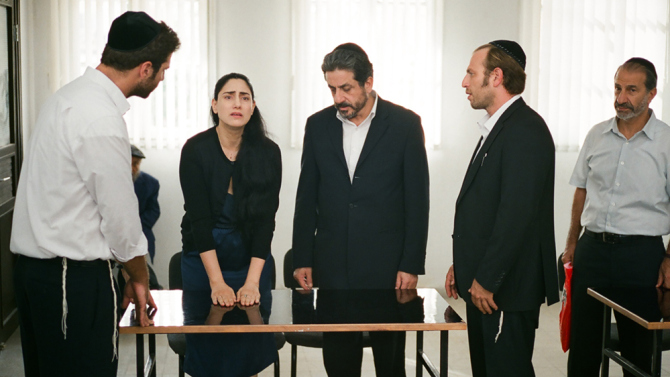
The Mill Valley Film Festival audience I saw it with suffered along with the movie’s heroine, groaning audibly when her husband orchestrated delay after painful delay. “Gett” is the third film in a trilogy about this couple, and as a viewer who hadn’t seen the first two movies I noticed the gaps in my understanding of how and why the Amsalem marriage fell apart. I had questions about their relationship the movie never answered. But the larger story surrounding the marriage, the story of a woman denied basic rights by her community, is enough to propel the narrative.
In case you think the story of an Orthodox woman in Israel is too distant to be relevant, remember that there are chained women in the US, in Western Europe; basically anywhere there are large Orthodox Jewish communities, there may be women unwillingly shackled to broken marriages and hostile husbands. By the film’s end viewers, who have been through so much with Viviane, can understand the ultimate sacrifice she considers making to gain her freedom at last. Viviane’s story will resonate with anyone who’s ever had to choose between community and autonomy, between tradition and self-determination.
“Gett” is in Hebrew and French with English subtitles.