

In recent weeks, students across the country have been posting pictures of their school lunches on every available form of social media, complaining about everything from the taste of the food to the lack of variety, or in some cases, the lack of food in general. This piece from CNN is one of many showcasing student concerns. While many blame Michelle Obama and the new food guidelines for their frustration, I would argue that the #ThanksMichelleObama hashtag is unwarranted. As a teacher who sees (and often eats) what the kids are eating on a daily basis, I wanted to shed some light on the facts versus fabrications regarding the school lunch program.
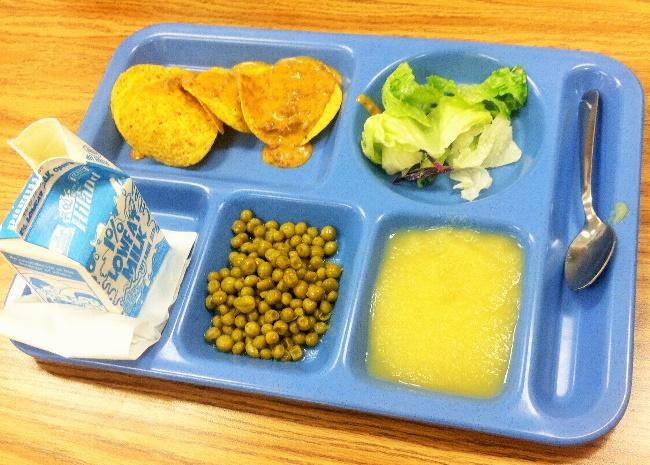
First, many of the teens posting pictures–and the parents who see the photos and hear the stories–are placing all of the blame on Michelle Obama and “her” changes to the school lunch program. This is partially true. Per the United States Department of Agriculture’s (USDA) Food and Nutrition Service division, “the healthier meal requirements are a key component of the Healthy, Hunger-Free Kids Act , which was championed by the First Lady as part of her Let’s Move! campaign and signed into law by President Obama”. Per the USDA, changes of this magnitude had not been made to the school lunch program in over thirty years, back when parents of today’s school-aged children were kids themselves. It is understandable that some are not comfortable with change, but to slam Michelle Obama for what is served at any one particular school is unfair. The food service department within each school district is tasked with designing menus for their buildings–not Mrs. Obama. While she may have had a strong influence on the requirements, she doesn’t hand-pick the food or write the menus. If there are concerns about mushy, unappealing food being served, parents are likely to get a response more quickly by contacting their local district, not calling the White House.
Now, about those requirements–are the changes really that significant? In some ways, yes, they are. Let’s look at a few of the main changes that have been implemented in cafeterias across the nation:
-
Previously, students were required to have ½ cup to ¾ cup of fruit/vegetables combined per day. Now, students must be offered ½ to 1 cup of fruit AND ¾ to 1 cup of vegetables per day. That is a significant increase. In many cases, where a sugary dessert like cookies or cake used to be served, fruit is now offered.
-
Previously, there was no requirement regarding which vegetables were to be served. Now, there are required subgroups which must be served weekly, including dark green vegetables, red/orange vegetables, beans/peas, and starchy vegetables. (In our school, there has been a noticeable increase in the serving of broccoli, sweet potatoes, carrots, tomatoes, and garbanzo beans.)
-
Previously, whole grains were encouraged but not required; as of July 2014, all grains must be whole grain rich. (In our school that has meant whole grain buns on burgers and sandwiches, as well as whole grain pasta and tortillas.)
-
Previously, milk with varying fat content was allowed; now, all milk must be fat-free or 1%.
-
Calories are now limited based on the age of children being served to ensure proper portion size
-
There has been increased focus on reducing the amounts of saturated fat, trans fats and sodium in foods
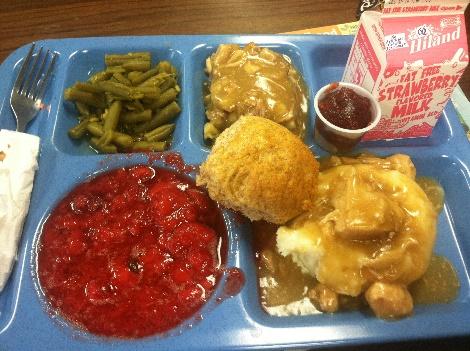
Still, you may be thinking, these changes don’t explain the half-empty trays many kids are posting photos of on social media. Where is all of the food? One big explanation for this is the new Offer Versus Serve policy, which allows students to decline some of the foods offered. Per the USDA, “the goals of OVS are to reduce food waste in the school meals programs while permitting students to decline foods they do not intend to eat”. In other words, if they think students are just going to dump the food in the garbage, they’d rather they not take those foods in the first place. At lunch, schools must offer students all five required food components: meats/meat alternates; grains; fruit; vegetables; and fluid milk. Under OVS, a student must take at least three components in the required serving sizes. One selection must be at least ½ cup from either the fruit or vegetable component. Since milk counts as one of the three, a student could conceivably leave the lunch line every day with only two food items on his/her tray. While this is within allowed guidelines, it is important to remember that the student grumbling about not having enough to eat is often doing so because he/she chose not to take all of the foods offered, not because they weren’t given enough food.
There have indeed been major changes to the school lunch program, and they were spearheaded in large part by the First Lady. Generally, these changes are positive, designed to up the amount of fruits, vegetables, and whole grains served in school lunches while decreasing the amount of sugar, trans fats, saturated fats, and sodium in the meals. As Mrs. Obama stated, “We want the food [kids] get at school to be the same kind of food we would serve at our own kitchen tables.” Where lunches miss the mark, either students are declining some of the offerings, or the school districts are making poor choices in the design of their menu. Finally, if there are meals we object to strongly, as parents, we are free to pack lunches for our children instead, whenever we choose to do so. That’s the beauty of choice.
2 comments
You're so welcome! I just get really frustrated when I see people blowing things out of proportion. If we all did a little more research before mounting crusades against new ideas or policies we'd be a lot better off in the long run.
Great post. I saw those hashtags too and felt bothered that so many people expressed dissatisfaction with their meals, upset at Michelle Obama because of what was being served in schools. Thank you for sharing your observations as a teacher who has seen firsthand what is being served and for clarifying the matter.