
“The thing women have yet to learn is nobody gives you power. You just take it.” – Roseanne Barr
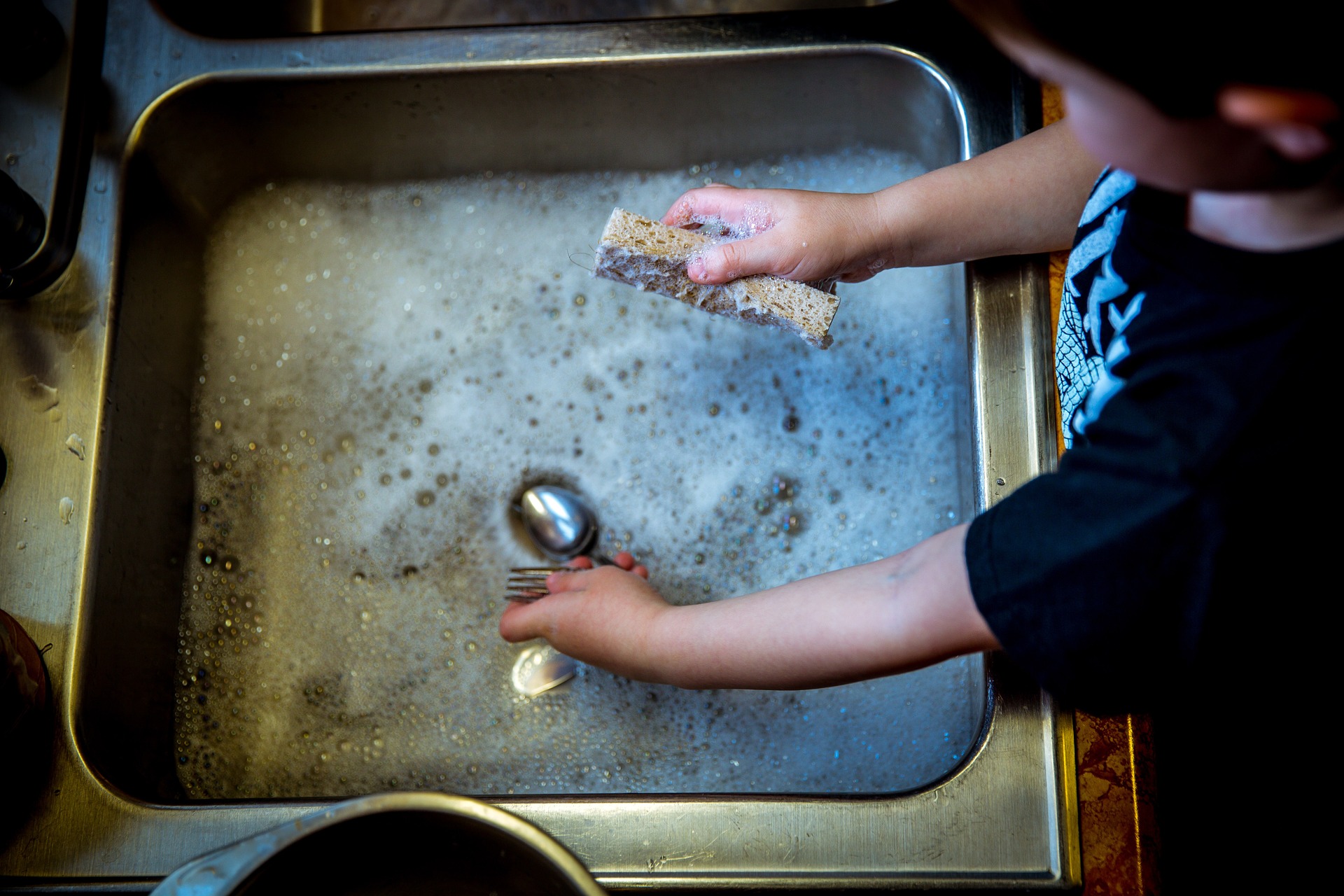
When I was growing up and dinnertime was over, everyone in the family would stand up and begin to clean up, except for my father. He would walk into the living room, sit down and turn on the news.
One day, I noticed that my brother had been headed into the living room with my father and was no longer helping to clean up. No one seemed to notice. I spoke up and said that my brother should have to help clean up. No one seemed to notice that either.
My parents could have had an egalitarian arrangement that my father work outside the home and that my mother work inside the home. They could have each appreciated the sharing of responsibilities that it took to grow a family and to run a home together.
However, even though my mother was the primary caretaker of the children, only made home-cooked meals, kept an immaculate house and in later years, also worked outside the home, her contributions seemed to be considered “less than” compared to what my father contributed. My father had a job outside the home and since he was the breadwinner, he was treated as the leader of everyone in the family, including my mother.
It’s important to be clear about the underlying beliefs that govern why different people in the household have different responsibilities. It is no coincidence that there are still men who never learned to cook, simply because they grew up in a home where that was not considered appropriate for boys. There are women who cannot mow a lawn because they grew up in a home where that was not considered appropriate for girls. It is not necessarily gender discrimination if, as adults, two people stick to those tasks they were taught growing up. It is vital, however, that each value the talents of the other and each be willing to learn the other’s skills in order to share the workload equally.
If my parents had modeled true gender equality in our home, I believe it would have never occurred to my brother that he was allowed to leave a messy kitchen in order to sit with my father in the living room. He would have known that the same rules applied to all of “the children”, each of whom had worked hard at school all day, still had homework to do and yet, were responsible for cleaning up after the whole family after dinner.
Instead, he seemed to have unconsciously picked up on the idea that the reason my father didn’t have to clean up was not because his job outside the home was an equal contribution to my mother’s running of the home, but simply because he was a boy. I believe he was unconsciously modeling the belief that as a boy he was to inherit a position of leadership and that girls would remain dutiful subjects, by deciding that he did not have to help – and having no one tell him otherwise when the issue was raised.
Many men and women still believe that men have a right to be in charge simply because of their gender, rather than their actual contributions to a partnership or group. This attitude is born directly from the belief that women are not as valuable or as important as men, which is blatant sexism.
I have always thought of gender discrimination as a unique issue. It is often discussed with other forms of discrimination, such as racial, ethnic or religious, however I believe it operates differently in our society.
Why do I believe this? Just about all of us can say that we are closely related to a member of the opposite sex and that we’ve had relationships – good or bad – with members of the opposite sex since birth. Most of us cannot say the same thing, however, about members of another race, religion or ethnic group, until only recently in our history.
I think this makes a big difference in how ingrained our views of gender are, versus our views of race, ethnicity or religion. Gender discrimination is so deep that it is almost invisible. In contrast, I believe we are more likely to be aware of how what we’ve been told about a racial group differs from our personal experience of its members once we meet them up close.
Since our beliefs about gender are born of our own childhood experiences of how men and women within our closest relationships treat one another, children will unconsciously adopt these beliefs unless they gain some distance from them and begin to question them.
I believe the values modeled for children within the family of origin are the same ones that become ingrained in our society. That puts anyone with influence over children in the most powerful position to change our society’s culture to one of equality. If we really want to champion gender equality, we should start by eradicating the gender discrimination within our own closest relationships in our own homes.
 Paula M. Jones is the creator of the multimedia web site, Small Epiphanies: Subtle Insights for Profound Change. Designed to be a single source of daily inspiration, Small Epiphanies is founded on the belief that true lasting change comes from the smallest insights that are available to us at all times. Check out her web site at www.smallepiphanies.co, like her Facebook page at www.facebook.com/smallepiphanies and follow her on Twitter at @EpiphaniesSmall.