
Photo from World Economic Forum
The World Economic Forum for 2017 took place in Davos last week where they discussed many pressing global matters, from leadership standards to global warming. Shakira, who is a UNICEF Global Ambassador, brought forward how early brain development in childhood is crucial and, unfortunately, overlooked. But if we focus on providing necessary “love, protection, and nutrition” to child brain development, the entire world will benefit. Read on for more:
Advances in neuroscience teach us that parents and caregivers, healthcare and early learning professionals, governments and societies can shape the brain structure of every child for the better by enriching and protecting their environment, from the moment they are conceived until they reach five years old.
In neuroscientific terms, optimal brain development in children equates to 1,000 neurons connecting every second. These neural connections form the architecture of a child’s thinking, learning, health, memory, ability to feel empathy, and many other vital components that help children lead a good life. The fact that we don’t have to depend solely on a child’s DNA to determine their health, growth and happiness, how well they will learn in school, or even how much they will earn when they reach adulthood – is one of incredible opportunity, and one of great responsibility.
Being a mother of two children who are currently in the midst of their peak brain-development periods, I definitely feel the weight of this immense opportunity and responsibility, which I’m sure is true for many parents and caregivers across the world. As I look at my children, I ask myself – am I doing everything I can to help their brains grow strong? Am I giving them enough love, protection and nutrition for optimal development? Are my actions positively contributing to their experiences and ultimately their cognitive, social and emotional development? I believe I am, and I am fortunate enough to be in a position to give them these critical elements of early childhood development.
Fundamental for growth
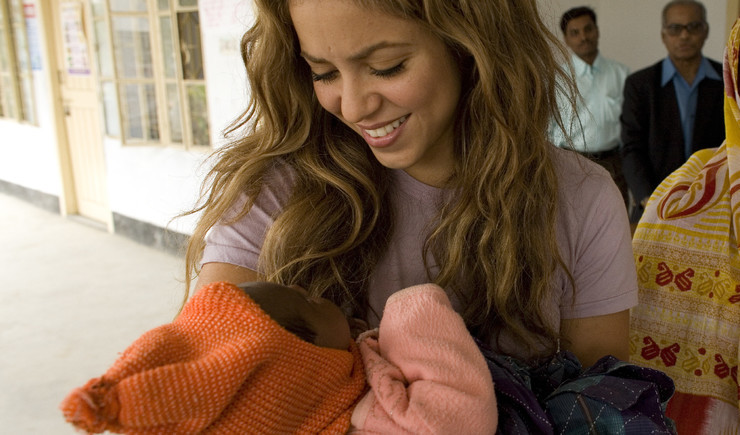
But today, millions of young children will spend their earliest moments starved of the love, good food, protection and play their brains so desperately need. The lack of stimulation, security and nurturing care, which can inhibit neural connections, is no fault of the child and often no fault of the parent or caregiver. Far from it. In fact, it’s a societal problem. There is far too little awareness of and appreciation for the simple elements of early childhood development that are absolutely fundamental for growth, not only for individual children and their families, but for entire economies. Moreover, we haven’t yet fully grasped the potential cost of inaction for generations to come.
Investing in early childhood development is one of the most cost-effective ways of increasing human capital. Inhibited growth in young children can lead to lower educational attainment, lower adult earnings and chronic disease. One study showed that disadvantaged children who received support from early childhood development programmes earned 25% more as adults than disadvantaged children with no support – earning as much as their more advantaged peers.
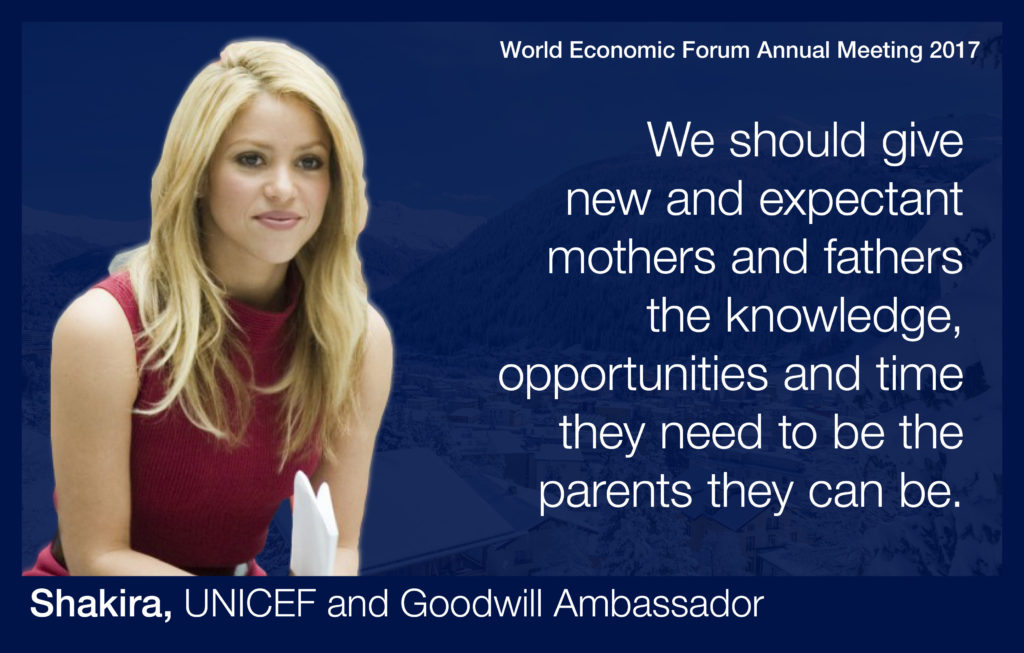
One solution is to give new and expectant mothers and fathers the knowledge, opportunities and time they need to be the parents they can be. The private sector must invest in its workforce now to ensure that the next generation of workers is equipped with the skills and brain capacity needed for employment. Moreover, by prioritizing financial investment in programmes that support early childhood development, the private sector will ensure the future of its workforce.
Time to act on the science
Another solution is to invest in the most excluded and most vulnerable families to give them the support they need to provide children with protection, nurturing care and enriching environments, helping them break out of inter-generational cycles of poverty and deprivation. Supporting the most vulnerable parents and caregivers can come at a relatively small cost – from as little as 50 cents per capita per year when parenting care programmes are included in existing health services.
During the time it will take you to read this article, a nurtured young child’s brain could have made 600,000 neural connections.
An early childhood movement is needed now. Governments and the private sector must invest in policies that support parents and give them the resources and time they need to love, nurture and protect their young children. We need investment in parenting care programmes. And finally, we need parents to understand they have a right to the time and knowledge they need to raise happy, healthy, creative children.
We know now, more than ever before, that there are ways to give the brains of every baby born the chance to develop to their optimal capability, to give every child the opportunity of reaching their full cognitive, emotional and linguistic potential. It is time to act on the science and enhance the lives and futures of generations to come.
Originally published on World Economic Forum.
Written by:
Shakira Mebarak, UNICEF Global Ambassador; Founder, Pies Descalzos Foundation
The views expressed in this article are those of the author alone and not the World Economic Forum.